
Chilli is not a cliche here, it is a method
A cuisine of preserves, born of the need to make things last in a climate that does not forgive.
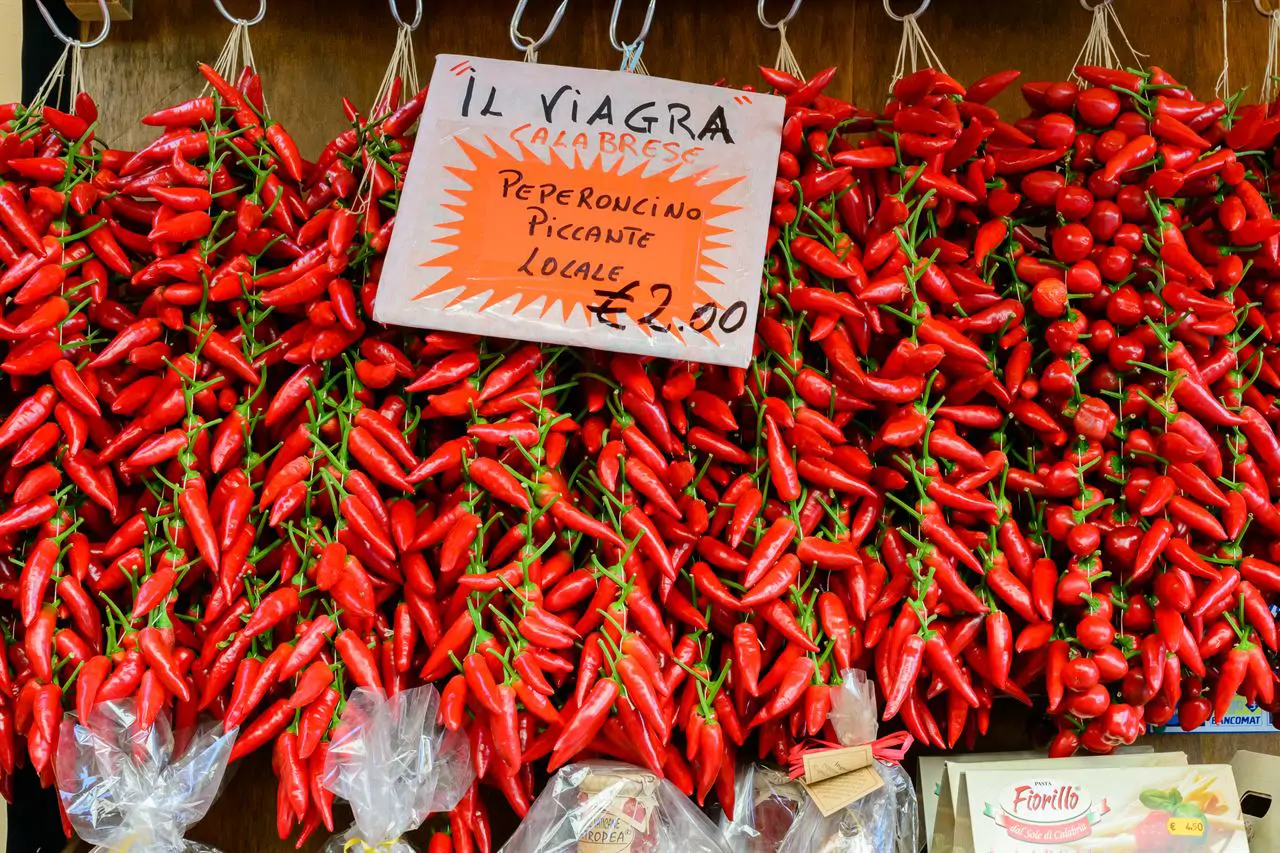
Calabrian cooking is cooking for keeping. Before refrigeration, in a hot region a long way from everywhere, whatever was not eaten at once had to go under salt, under oil, under spirit or out in the sun. Chilli belongs to that logic: it is not there to make things hot for the sake of it, it is there to preserve. That it went on to become the region's recognisable badge is a consequence, not the starting point.
Whatever was not eaten at once was made to last.
The rule everything else comes from
Nduja
Nduja is a spreadable salami, soft, bright red, made from the fatty cuts of the pig and a quantity of chilli that looks at first glance like a mistake. It comes from Spilinga, a village above Tropea, and its fame outside Calabria is recent: for generations it was food made at home. You spread it on warm bread, melt it into a sauce, put it on pizza.
The Tropea onion
It is not a sweet onion by way of speaking: it really is sweet, to the point of being eaten raw in salads. It grows in the sandy strip between Nicotera and Pizzo, where the soil is light and the sea softens the temperature swings. It carries the IGP mark and is still sold plaited, which was how it used to be kept, hanging. Red onion marmalade, served with cheese, is a recent invention but a good one.
Bergamot

Bergamot is the oddest case of all: a citrus fruit that grows practically nowhere else in the world except a strip of Ionian coast a few kilometres wide, between Reggio Calabria and Melito. For centuries it was grown for its essence, which is in almost every perfume and in Earl Grey tea; only in recent years has it also been used in cooking and pastry.
Liquorice
On the plain of Sybaris liquorice grows wild and has been worked for centuries. It is a root that is dug up, boiled and reduced until it becomes the black paste that is cut into sticks. It has DOP status, and at Rossano one family has been working it in the same premises since the eighteenth century, in a building that now also houses a museum.
The rest of the table
Swordfish in the Strait, still caught from boats with long gangways. Caciocavallo silano and pecorino from Crotone. Soppressata and capocollo. Aubergines in oil, which are the household preserve above all others. And the wine: Ciro, made from gaglioppo grapes around Ciro Marina, is the Calabrian red you are most likely to find outside the region.