
The Aspromonte
The massif that closes the peninsula: wide torrent beds, abandoned villages and the view of Etna.
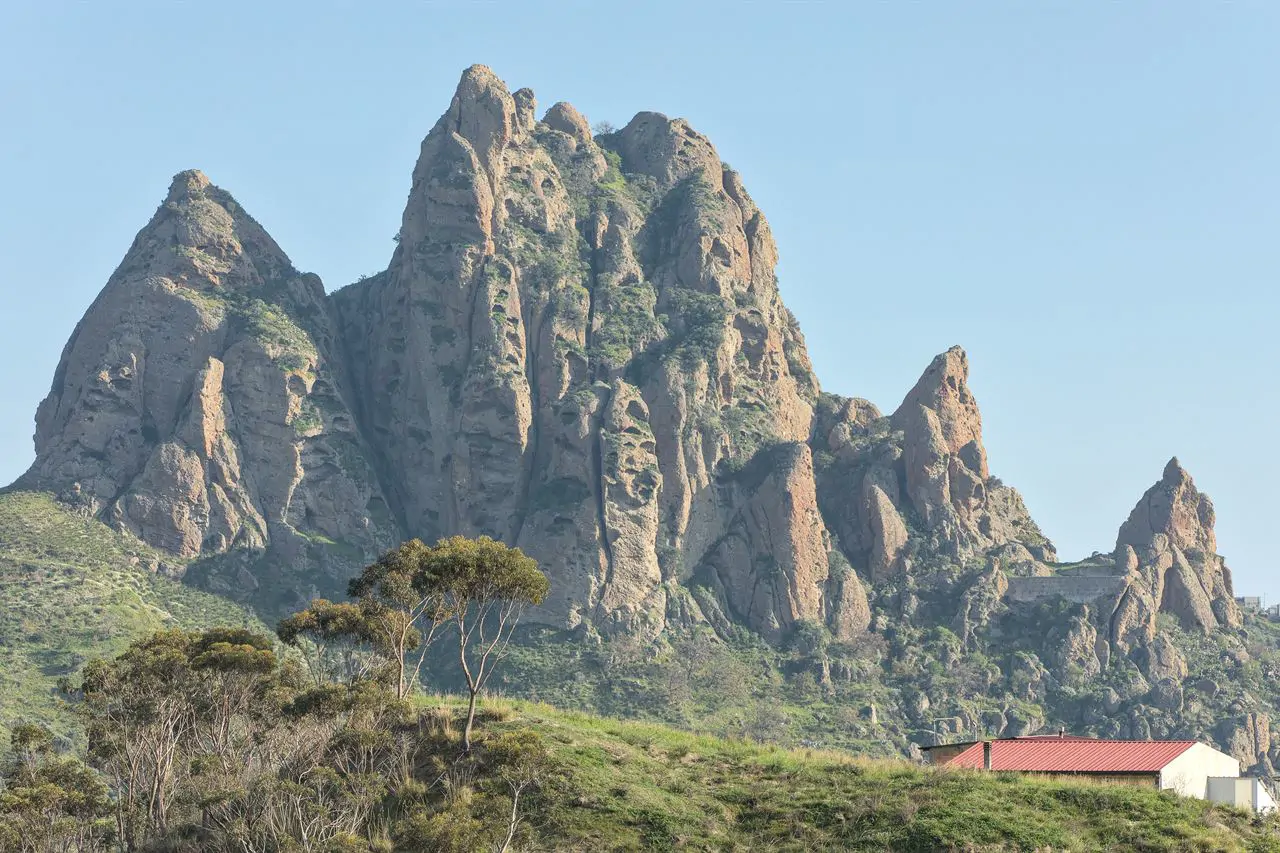
The Aspromonte is the mountain of the tip, and the name misleads: it does not come from aspro, harsh, but from Greek, and it meant white mountain. From the coast it looks like a single unbroken wall; climbing it, you find it is made of stacked terraces, each with its own vegetation, from citrus at the bottom to beech at the top.
The fiumare
The fiumara is the shape of the Aspromonte landscape: a very wide bed of white stones, dry almost all year, running from the massif down to the sea. They look like abandoned roads. Then the autumn rain comes and in a few hours they fill: that is why the villages stand high on the flanks and not on the floor, and why some were abandoned after the floods of the twentieth century.
The villages that emptied
Pentedattilo stands on a crag that opens into five points like a hand, and was almost entirely abandoned; today a few houses have been restored and in summer there are workshops and festivals. Old Roghudi was left after the floods of the nineteen-seventies and can only be reached on foot. These are places you visit quietly.
Calabrian Greek
On this side a language survives that descends directly from ancient Greek, still spoken by a few hundred people at Bova, Galliciano and the villages nearby. Bova stands at nine hundred metres and is reached from Melito by a long, winding road: it is the visit that rounds off a day on the Aspromonte well.